
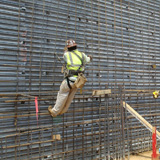
Stay in Place-Formwork for Commercial Construction: Renewable Energy, Civil Projects, Infrastructure, Institutional, and Technology

About the Provider
Alabama Metal Industries Corporation (AMICO) is an industry leader in manufacturing, steel fabrication and material transformation. We produce and distribute high quality industrial flooring & grating, perforated & expanded metals, architectural meshes, building and security products worldwide.
Course questions/comments
(800) 366-2642
Learning Objectives:
- Explain how stay in place forming systems support structural safety by meeting key guidelines from ASTM A653 for material performance and ACI 347 for formwork design, including load resistance, bracing practices, concrete pressure considerations, and the surface characteristics required for proper construction joint bonding.
- Describe how the open mesh and ribbed steel design improves concrete consolidation, reduces trapped air, manages water displacement, and provides a roughened surface that supports construction joint bond requirements outlined in ACI 301, which helps protect long term structural integrity and occupant safety.
- Identify a range of suitable applications (duct banks, data center slabs and pads, equipment enclosures, blindside walls, tunnels, shotcrete-backed walls, bulkheads, and grade beams) and evaluate when stay in place formwork offers advantages over traditional form systems.
- Recognize how stay in place forming systems reduce waste, eliminate the hazards associated with stripping heavy forms, support domestic sourcing requirements, and improve project sustainability by minimizing material handling, disposal, and site disturbance, all of which contribute to better environmental and community welfare outcomes.
Provided By:
Available Regions:
Continental US
Design Category:
(03) Concrete